Anne Carson Wins 2026 Nobel Prize in Literature
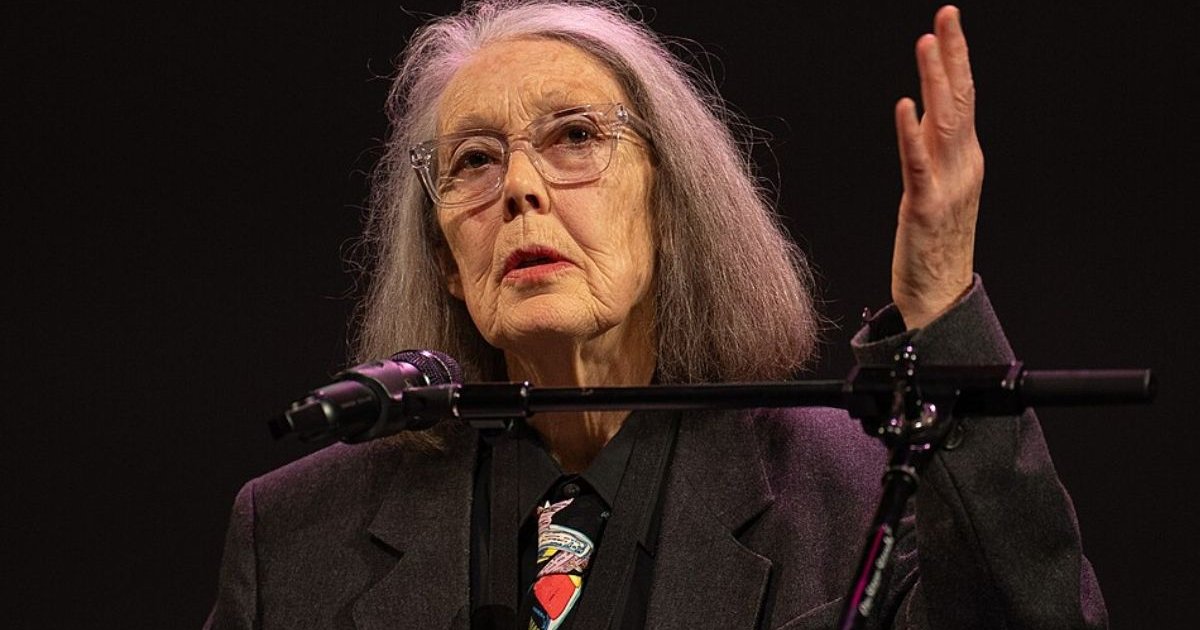
The Swedish Academy has awarded the 2026 Nobel Prize in Literature to Canadian poet, essayist and classicist Anne Carson, recognizing a remarkable career that has transformed ancient Greek texts into vibrant contemporary literature. The academy praised Carson for her bold and inventive oeuvre that, in playful dialogue with the classical tradition, has created new forms for contemporary writing.
Ingrid Carlberg, permanent secretary of the Swedish Academy, revealed that Carson was in Iceland listening to the wind when the committee reached her with the news. Carson follows Hungarian author László Krasznahorkai, who won the 2025 Nobel Prize in Literature.
Early Life and Classical Foundations
Born in Toronto on June 21, 1950, Carson developed a passion for ancient languages early in life. A high school Latin instructor introduced her to ancient Greek, an experience that would fundamentally shape her academic and literary trajectory. She attended St. Michael’s College at the University of Toronto, and after leaving the university twice, she completed her B.A. in 1974, M.A. in 1975 and PhD in 1981. She also studied Greek metrics for a year at the University of St. Andrews in Scotland.
Academic Career and Transatlantic Moves
Carson went on to teach classics, comparative literature and creative writing at universities in Canada and the United States, including McGill University, Princeton University and the University of Michigan. In recent years, she has lived in Iceland for extended periods and became an Icelandic citizen in 2022.
A Career of Genre-Defying Works
Carson’s literary career spans poetry, prose, translation and scholarship. Her long poem Kinds of Water, published in 1987, helped establish her international reputation. Among her best-known books is Autobiography of Red (1998), a verse novel that reimagines the Greek myth of Geryon. Her 2010 work Nox, created in memory of her late brother, combines poetry, prose, images and other materials in an unconventional elegy.
Other major works include The Beauty of the Husband: A Fictional Essay in 29 Tangos (2001), Decreation (2005), Red Doc (2013), Float (2016) and Wrong Norma (2024). Carson has also translated several major works from ancient Greek, including Sophocles’ Electra, If Not, Winter: Fragments of Sappho and An Oresteia.
Awards and Recognition
The Nobel Prize is the latest in a long list of major honors Carson has received. Her previous awards include the Lannan Literary Award, Pushcart Prize, Griffin Poetry Prize, Guggenheim Fellowship and MacArthur Fellowship. In 2020, Carson received the Princess of Asturias Award for Literature.
In 2021, she won the PEN/Nabokov Award for Achievement in International Literature. In 2025, she received the Zbigniew Herbert International Literary Award, which recognized her work as a poet, essayist, translator and classical philologist. Her 2024 collection Wrong Norma was also a finalist for the National Book Award and won the National Book Critics Circle Award.
Bridging Ancient and Modern Worlds
Rather than limiting her work to a single genre, Carson has used poetry, prose, translation and scholarship to explore subjects including mythology, love, loss, language and memory. The Swedish Academy’s citation reflects this approach, highlighting Carson’s ability to engage with classical literature while developing forms suited to contemporary writing.
Her work often draws parallels between ancient myths and modern experiences, making timeless stories feel urgent and relevant. For instance, in Autobiography of Red, she reinterprets the myth of the monster Geryon as a contemporary coming-of-age story about desire and identity.
Icelandic Influence and Global Perspective
Carson’s move to Iceland and her acquisition of Icelandic citizenship in 2022 have added another layer to her work. The stark landscapes and rich literary traditions of Iceland have influenced her recent writing, including the 2024 collection Wrong Norma. This collection, which won the National Book Critics Circle Award, showcases her continued experimentation with form and content.
Nobel Prize Ceremony and Legacy
The 2026 Nobel Prizes will be formally presented at ceremonies on December 10, the anniversary of Alfred Nobel’s death. The Nobel Peace Prize will be presented in Oslo, while the other Nobel Prizes, including the Literature prize, will be presented in Stockholm. Carson’s win marks the latest chapter in a literary career spanning more than four decades.
Her recognition by the Swedish Academy solidifies her place among the most innovative writers of our time. Carson’s ability to weave together ancient texts and modern sensibilities has not only earned her the Nobel Prize but has also inspired a new generation of writers to explore the boundaries between past and present.
For readers interested in exploring more about the intersection of classical and modern literature, our site offers a look at how other artists have drawn from ancient traditions in unexpected ways. For example, the WoW Forever Skyborne article discusses how Blizzard Entertainment reimagined mythological themes in a modern gaming context.
Similarly, the enduring legacy of classic storytelling can be seen in the tributes to Eva Marie Saint, whose career spanned decades and connected audiences to timeless narratives.
Conclusion
Anne Carson’s Nobel Prize win is a testament to the power of literature to transcend time and culture. By breathing new life into ancient Greek classics, she has shown that the stories of the past can still speak to us today in profound and surprising ways. Her work continues to challenge and delight readers around the world, and the Nobel Prize is a fitting recognition of her extraordinary contribution to contemporary literature.
Source Reference (ibtimes.sg): Who Is Anne Carson? Meet the 2026 Nobel Prize Winner Who Turned Ancient Greek Classics Into Modern Literature
Frequently Asked Questions (FAQ)
Why did Anne Carson win the 2026 Nobel Prize in Literature?
The Swedish Academy awarded Anne Carson the 2026 Nobel Prize in Literature for her bold and inventive oeuvre that, in playful dialogue with the classical tradition, has created new forms for contemporary literature.
What are Anne Carson's most famous works?
Anne Carson's best-known works include Autobiography of Red (1998), a verse novel reimagining the Greek myth of Geryon, and Nox (2010), an unconventional elegy for her brother. Other major works include The Beauty of the Husband, Decreation, Red Doc, Float and Wrong Norma.
How did Anne Carson's background in classics influence her writing?
Carson learned ancient Greek in high school and later earned a PhD in classics. This foundation allowed her to translate and reinterpret ancient Greek texts, blending classical themes with modern literary forms.